
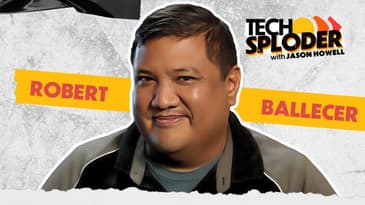

Father Robert Ballecer, aka The Digital Jesuit, lives two lives: One as a dedicated Jesuit priest working at the Vatican in Rome, and the other as a lifelong tech nerd. Here he explains why those seemingly different aspects of his life are actually one and the same.
🔔 Please support our work on Patreon: http://www.patreon.com/JasonHowell
- Father Robert's experience living in Rome and contrasts with more tech-centric cities
- Father Robert's role in the church and how it relates to his technology work
- Father Robert's childhood interest in technology and parental support
- Early experiences with dumpster diving for computer parts
- Fixing and selling TRS-80 computers
- Running a Bulletin Board System (BBS) as a youth
- Selling refurbished floppy disks through a BBS
- Early experiences with YouTube and content creation
- Monetization of YouTube content and optimization techniques
- Discussion of pre-iPod MP3 players and early consumer tech
- Father Robert's experiences with hacking school computer systems
- Phone phreaking and early hacking experiences
- Father Robert's interest in The Expanse sci-fi series and its realistic technology
- Discussion of fusion technology and energy conversion as potential future developments
Fr. Robert Ballecer on Twitter (X): https://twitter.com/padresj
Fr. Robert Ballecer on YouTube: https://www.youtube.com/DigitalJesuit
Hosted on Acast. See acast.com/privacy for more information.
[00:00:00] Right now we are so obsessed with being right that we forget that we really just want to be better. I will trade being right for living in a place that I could be proud of. This is the Techsploder podcast, conversations with tech professionals about being human
[00:00:21] in a binary world. Episode 10, Fr. Robert Ballecer. Techsploder is made possible by the financial support of our patrons like Larry Bailey. Thank you, Larry. If you like what you hear, head on over to patreon.com. Slash Jason Howell like Larry did and you can support the show directly.
[00:00:39] And thank you for making independent podcasting possible. Hello and welcome to the Techsploder podcast. I'm your host Jason Howell. And this week we've got a very special guest. It's Fr. Robert Ballecer, a good friend of mine also known as the digital Jesuit. Fr. Robert is a Catholic priest
[00:00:58] as well as a tech expert, content creator and podcaster. He keeps himself very busy from building computers as a teenager to setting up studios at the Vatican in Rome, Italy. Fr. Robert Ballecer has really dedicated his life's work to the fusion of his faith work in
[00:01:15] the church and his passion for technology. Now Fr. Robert was also a host on the twit.tv podcast network along with me for a number of years before actually moving to Rome
[00:01:27] to work for the Jesuit Curia where he resides today. Now I just got back from our family vacation through Italy just a handful of days ago, still kind of battling a little bit of the jet lag.
[00:01:40] And Fr. Robert Ballecer is a primary reason why we went in the first place. We actually stayed at the Vatican housing during our time in Rome. And while we were there, I had the pleasure of chatting with Padre in his production studio for this episode.
[00:01:57] So here it is, we started things off talking about travel, specifically Washington, DC, where we had just traveled from a few days prior. So let's drop right in my conversation with a good friend Fr. Robert Ballecer. My favorite museum in DC is the air and space, not the
[00:02:16] one on the mall, not the one on the mall. The Heisei Uda, something, it's named after a famous guy. It's near IAD airport. Okay, that thing is incredible because it's got a space shuttle,
[00:02:29] it's got the SR 71, it's got basically every plane. It makes the one on the mall look like a Best Buy. A little sample. Yeah. But it's nice. I mean, I kind of miss living in DC.
[00:02:44] I did not think I was going to like it. When I was sent to DC, I was like, okay, well, mission, this is what we do. When were you sent to DC? 2009. So I was there from 2009 to 2013,
[00:02:55] which by the way, that's when I started interacting with you because it was a 30 minute walk to and from the office every day. And so what I had on my, actually it wasn't phone at the time. It was an actual MP3 player where you had to download stuff.
[00:03:13] I had Buzz out loud. There you go. Well, interesting. Father Robert Ballasair. Wow. So okay. So you were in DC for four years. That's a long enough time to kind of get a sense
[00:03:30] of all the things that people travel there to see and then to see all sorts of other things. Because you've done a lot of travel with the Jesuit. A little bit. Yeah, the Jesuit.
[00:03:39] I have with the Jesuits, I have now been on every continent that includes Antarctica. No kidding. That's amazing. Too much travel. That's no, it's too much travel. Really, it's too much travel prior to all this. Did you like, would you say you are a travel
[00:03:55] like interested in travel? Or is, you know, because some people that would like scare them in their boots. They're like, you know what, no, I just want to stay in one place. And
[00:04:03] other people, that's like the dream. I travel a lot before I entered the society with my family. Yeah. And then some solo stuff, but not nothing like once I joined the Society of Jesus. I mean,
[00:04:14] I've been sent everywhere, everywhere. And I had a weird history for a while there where the longest assignment I had was like two years. And even within the two years assignment, I was normally lent out here and there for a special project here, a special project there,
[00:04:31] went to Bolivia, went to China, went to the Philippines, went to Vietnam. And it wasn't until Twitter that I had an assignment that lasted five years, which was amazing. Interesting. And the timing of that too. Okay. All right. So this is,
[00:04:49] this is one of the, I have to imagine one of the things that you have had to explain a lot in your career is how you, a career Jesuit priest are also, or, you know, and continue to be.
[00:05:07] I mean, you have, you have a lot of fascination and background in technology, which we'll talk about. But you also kind of had like a full-time podcast host gig there for a while. And I imagine a
[00:05:18] lot of people probably ask you like, how do those two things line up? Like isn't being a Jesuit priest the full-time job? Like how do they both exist at the same time?
[00:05:26] Okay. You have to remember that at that time I was much healthier than I am right now. I was much slimmer than I am right now. And I didn't sleep at all. If I slept four hours during the night,
[00:05:39] that was like, I was a long, long nap. Seriously? It was. That's no longer the case. Now if I try to do that after the second week, I'm destroyed. Yeah. Yeah. Noel,
[00:05:50] time comes for all of us. And as we get older, those kinds of things, they are not as easy as they once were. Actually, the one that did it for me was tanning. So when I was up to my 30s,
[00:06:01] I could stay out as long as I wanted in the sun. No sunblock, no nothing, no protection. And I would get dark, I would never burn. I would just get darker and darker and darker. Were you wearing SPF? Nothing. Nothing. But then 30 came and suddenly,
[00:06:17] like if I'm out in the sun for 15 minutes too long and suddenly I come back, I'm like, this is a sunburn. This is what a sunburn feels like. Yeah, they're no good. No, but okay.
[00:06:27] So back to that. How was that possible? I had so much energy and I had so many interests and so many hobbies that I kind of just did everything. So I did my work
[00:06:41] for the Society of Jesus. I was a priest, I was a minister, I was a confessor, I was a man who worked with young adults trying to give them guidance and spiritual direction.
[00:06:52] So I did all the things that you would expect a priest to do and that took a quarter of my day. So I needed to do something else with some of that time because I had all
[00:07:01] this energy, I had to burn off. Yeah. So I started looking at podcasting. It was brand new. No one was really doing it. It wasn't even really a thing. We didn't call it podcasting. It was just me getting in front of them. Sharing audio files on time.
[00:07:13] Yeah, exactly. Well, no, it was me finding an old camera, fixing it and going, okay, well, let's record something. What do I want to do with this? Yeah. And I'm sure you
[00:07:21] have this experience too but I look back at some of the various, I still have the source files for all those early episodes. I look at it and I go, and I'm embarrassed. I'm like, oh my God,
[00:07:29] that's terrible. It's hard. Oh, I know exactly what you mean. It took me years to get used to seeing myself on a screen and probably it took me much longer to get used to hearing my voice because there's something about the fact like in podcasting,
[00:07:48] you know, we're talking into a microphone. And on the other side of that through the speaker or the headphone or whatever, we're hearing ourselves probably the way other people hear us. But when we're talking, when I'm talking right now, I'm hearing myself through the rattle
[00:08:03] brain makeup and the sound vibrating. So what I hear of my voice is very different from what I hear through a speaker or a headphone. Yeah, that's unsettling. That takes a really long time for people
[00:08:14] to get over. The funny thing is we both have had haters at one point or another. Never. I know. On the internet? No. It's a hot forbid. But when they think they're hurting you by pointing
[00:08:27] out something they don't like about your voice or your style and you're like, I know all these things because I see it every time I edit my videos. Oh yeah, totally. Why did I say that?
[00:08:36] Or why did I have that? That's the wrong pronunciation. But okay, so getting back to it. So I'm doing this thing and I remember YouTube was still relatively new and it was mostly used to piss off Viacom because everyone was uploading their content. And I started uploading and
[00:08:59] 10 views, 20 views. I think episode six had like 100 views and I was like, oh, it's also the name of the podcast at this point. It was called Gadgets. Just Gadgets. No, no, Gadget. Gadget. Gadget. But not GDGT. No, no, no, no, no, no. It's G-A-D-G-E-T. It's actually
[00:09:21] actually yours came after. I should have sued you. No, but And then I hit, I think it was like episode 25 and this was my first experience of the YouTube algorithm. It must have liked me and I went from like 100 views, 200 views, 300 views and something
[00:09:36] it was 37,000 views and I was like, what the, what just happened? Something on a podcast episode uploaded to YouTube before YouTube had any sort of like podcast infrastructure. Exactly. Only recently really built in. And I wasn't, I had like five followers on Twitter.
[00:09:52] So that wasn't it. I wasn't really doing the Facebook thing anymore. And then I thought, okay, this is a fluke and then the next episode got 50,000 and the next episode got 100,000. I'm thinking, okay, this is kind of cool. And then it's a great nut. Yeah. And then suddenly
[00:10:06] it said, oh, do you want to monetize your account? And I thought, okay, let's see what that does. And so that first, after the first year, I got my monetization and the first check that came in was for like $16,000, $17,000. Are you serious from YouTube? From YouTube. That's amazing.
[00:10:24] And it was, it was because I found out later, because I actually started learning about the black magic that is YouTube optimization. Yeah. Yeah. That it was because a lot of the technology that I was reviewing came from enterprise vendors and they pay way more
[00:10:42] than consumer vendors. Oh, on CPM is that what you're talking about? Oh, okay. So like, wow. And again, that was my first foray into optimization. And I started thinking, wow, there's certain content that they really, really like. I may not enjoy doing it, but it pays the bills.
[00:11:02] That is the flip side of it. But you know nothing about that, right? I don't know what you're talking about. I've spent a lot of time with technology that I care about and
[00:11:10] a lot of time with technology that I don't really care much about, but it's just kind of part of the gig, I suppose. Well, I mean, and part of that is also you recognize just because I don't like it
[00:11:19] doesn't mean it's not important to me. Oh, for sure. And like enterprise stuff. I have a soft spot for enterprise hardware. It's kind of where I came from. And it just happened that that was a very, very profitable sector of podcasting. Yeah. And that continued into
[00:11:35] Twitter. Right. And continues continues to be a pretty lucrative in B2B, all that kind of stuff. There's definitely a lot of money there. So okay, so that but all this YouTube stuff was happening prior to joining Twitter. Oh, wait, I started this like in 2009. No, no, like 2004.
[00:11:58] Well, 2003 was the first one. But that but that was in YouTube because YouTube, I don't think YouTube was around in 2003, right? So whatever the first year of YouTube was, that's when I first started, I started pushing into YouTube like a YouTube OG. It was, yeah,
[00:12:12] no, I mean, I've had an account for forever. Yeah, kidding. Back when we started with named accounts and then they became anonymous accounts and then I was able to get a named
[00:12:20] account once I had enough viewers. It was very strange. And in fact, I remember I was at YouTube, I was with YouTube before they started checking for people like using bot
[00:12:32] networks to add views. Oh boy. Yeah. So there was one one episode, I think the third episode that I got that hit six, six digits. I was someone's like, Oh, so you're using a bot network? And I
[00:12:46] was like, Oh, what? I said, I need to write this. I know. I'm like, how do I make a bot network? How to bot network? Wow. I could just there's a video right there. How to bot network
[00:12:59] for YouTube. And yeah, that's like in the dark side of the internet. Yeah. But it seems to skew that way at some point. But then when I went to to DC, so I went from San Jose, which is where
[00:13:11] I started doing all this at our parish, mostly Trinity in San Jose. And my primary work was with the youth group. So I was we had a special house that was for the young adults of the community.
[00:13:24] And it just became the place to hang out. We had what 100, 200 kids at any time who would be, they do their homework there, they'd watch TV, they'd socialize. So it became a really nice
[00:13:37] place to put your pulse on what was put your thumb on the pulse of what was interesting, what was motivating youth. And that really helped. Because I would get all the stuff into my office,
[00:13:49] and they knew where my office was because it was it was the house over. And so I'd get the knock on the door and say, Hey, can we come in and talk? And I know what that meant. It went,
[00:13:57] we want to play with the toys you got. Show me all the technological doodads. Well, I had a room that was filled with just products waiting to be reviewed. Yeah. So they'd go in there and this, they were the best review team ever because by the time
[00:14:12] they left, I could just look at, okay, what is left on the table? Yeah. What are the things that they really were those are the things that you got to put up. So what are some of your like,
[00:14:23] some of the gadgets that you were reviewing at the time that like that let stand out for you? Right. So a lot of NASA. So before Nazas became a common thing. Yeah.
[00:14:32] Yeah. This was just as people were really recovering from the Napster era. And we would moved into the Torrent era. And for them to have a device that would let them have access to everything that
[00:14:45] they downloaded, like that was a new thing for them. Sure. And back then it was Netgear, Netgear and QNAP that were the two companies that would send me stuff. And I always had love for the companies who would trust someone who I didn't have a name. I didn't
[00:15:00] have a rep. All they knew was I would send them an example. I said, this is my style. If you like it, maybe send me some stuff so I could review it. Like Gateway, which became
[00:15:12] Acer, they were the same way. So I have the special love for Gateway and special love for Dell. They did the same thing. But yeah, aside from the laptops, they always love laptops. They love the Nazas. But then it was weird tech like before
[00:15:30] the iPod truly took over everything. Oh, man. Yes. The pre iPod MP3 player era. That was an interesting time. As tech, as people who loved tech and could see the direction of things
[00:15:47] at the MP3 era, all that technology was always kind of the good example of making promises, not quite delivering on them. And that's really why the iPod ended up doing so well is because it
[00:16:03] delivered and then some finally. If even one of those companies had delivered on what they had promised, the iPod would not have had a market. You had Microsoft, you had Sansa, you had Sony, you had Panasonic, you had Pioneer. They had all provided something that was
[00:16:23] supposed to be sort of a standards based product that you could just download stuff and they all had conversion software that sometimes worked and wouldn't plug straight in. Bring back some bad memories here, Pod, right? But I mean, they loved it. So I knew that there was something
[00:16:39] there. And at the same time, I now look at the devices that they were interested in. And I realized those were all pretty crap. They were they were pretty not usable.
[00:16:47] Yeah, but there was that desire that was that hunger to have it. I should have used that to say this is this is going to be a big consumer. Yeah. And hindsight is always 2020, right? Like looking
[00:16:57] at that, I do remember my first I wish I could remember the brand of my first MP3 player, but I remember getting it. God, I wish I still had that. And I think it had like 200
[00:17:08] megs of storage on device. What do you do with all that storage? But it was like, of course they sold it on number of songs. You could store 50 songs or whatever the number was.
[00:17:20] And that was just amazing to me. It was like, wait a minute. So you're saying I can just because at that time for me, it wasn't about storing my entire library. That didn't even
[00:17:31] cross my mind. It was what are the 50 songs that I want to take with me right now for this thing that I'm going to that I need to listen. It was almost like on demand, creating a
[00:17:40] playlist, moving it over and that's my playlist for the day or whatever. And man, things got a whole lot easier when you could just put everything on there or load, pull it down from the cloud.
[00:17:50] Do you remember when Sony released their is it UHD format? UHD format. I mean, I vaguely yeah, it was basically it's like the freedom of any of your MP3 players, but now with DRM.
[00:18:03] And it was oh, that's right. Okay. Yes. And it was you're looking this going wait, wait. So this is literally the selling point. The only thing that differentiates you is it's harder for
[00:18:13] me to get songs into and out of your player. I'm like, Oh yeah, that sounds that sounds good. Yeah, let's do that. Yeah, sounds good to me. So would you say that your passion for technology and your career with the Jesuits
[00:18:32] is a complimentary relationship because they're very different. It's easy, I would say for almost anyone from the outside looking in, they seem like two very different things. But like, I'm here in Rome right now with you. I'm sitting in your studio closet, which studio closet. Okay.
[00:18:49] Hey, you know what? It's bigger than I think my room and it's got air conditioning. So that's what matters. It's hot on a day like today is really appreciated. But and then you're doing a lot of technology stuff for the church, which I mean, that's largely
[00:19:05] what you do here, right? And continue to do here. You've been now been in Rome for six years. And I remember and I remember, I think this is something I could say. You would forget this.
[00:19:16] But I remember you say like, Yeah, probably go for a couple of years and then, you know, somewhere else. And it seemed like every year was like, Yep, another year, another year in my naivete. I got the missioning letter from Father General and it listed like, you know,
[00:19:31] here are the 17 things we want you to do. And it was set up a studio, set up a workflow for creating content of, you know, beef up our social media press, things that you would expect from a group
[00:19:42] that was just trying to turn to catch up in the communications world. And I'm looking at this list going, I don't see this taking me longer than six months. I mean, I do this stuff as
[00:19:51] a hobby. It's cool. So I get here. And immediately that hope is dashed because things move at a different pace in Italy. You may have noticed, I've noticed. Yeah, I've noticed a little bit slower.
[00:20:03] Yeah, it's a different tempo. Yes, as a American stepping into this country. I really and I knew this kind of stepping in because I'd done a lot of reading research and everything. But yes, it's you got to intentionally take your foot off the gas a little bit. Yeah,
[00:20:18] it's cultural. And if you try to push forward like an American would push forward, you will upset a lot of people, which I did. So yeah, but after the first year, everything on the list was done. Absolutely done. And so I crushed it. I crushed it.
[00:20:35] Not only that, we had brought in other Jesuits and they were communications minded. And I'm like, okay, so we're training new people. We've got a workflow. We know what this
[00:20:44] department is for now. So I sat down and I had my talk with Father General after the second year, which is already a year longer than I thought it would be. And I said, you know, Father General,
[00:20:54] this isn't Italian, by the way, is a Father General. I've completed the mission that you have brought me here for. And I think it's in good hands. We can turn this over to a younger
[00:21:05] generation. And I think maybe it's time for me to go home. All right, done here. I'm done here. I'm done here. What's next? And he just looks at me and I love this man, Arturo Sosa. He just sort of says, you should learn more Italian.
[00:21:27] Okay, okay. I got it. I got it. And now I'm at peace with it. This is where the Jesuits need me. This is where the church needs me right now. And it is,
[00:21:38] it is, I mean, it's incredibly historical to be positioned here. I mean, about as historical as it gets, right? Like, and mind you, I've only been in Rome for four days. And, you know, we've seen
[00:21:49] as much as we can without beating ourselves into the ground because you can do that very easily here. And yeah, it's just like I'm floored at the history. And that's actually one of the questions I have for you. Being so technology minded, you and also, as you've said,
[00:22:06] living in so many other parts of the world that are maybe on the surface more tech centric, like the Bay Area without, you know, without question, a very tech centric area, right? Now you're living in one of the oldest cities in existence. Which is not tech centric. Well,
[00:22:23] yeah, what is the technology experience for someone in your shoes with that kind of perspective living in a city like Rome? Right. That is so historical. It is a city of contrasts.
[00:22:38] So it is exceptionally difficult for me to get gear. Yeah, oh, I imagine so. And yeah, even if you find a place where you can buy it, it's ridiculously expensive because of all the tariffs. So I
[00:22:50] probably shouldn't say this on camera, but I'm gonna, because you don't know where I am, you can't find me. But a lot of times I just sort of smuggle stuff in. No, no, it's not
[00:22:58] smuggled because it's personally purchased and I bring it back with me. If I was bringing it for resell, that would be smuggling. But right. But I mean, when you're when you're home
[00:23:07] exactly buy and I mean, it's the same thing as if you happen to buy something and precisely want to bring it with you. I mean, it's exactly the same. The camera that I purchased
[00:23:16] for the green screen studio downstairs, which is a nice one. The price of buying it in Italy was more than the price of buying it in the United States and buying a plane ticket to go get it.
[00:23:31] Geez, so it was just like, oh, that's a no brainer. Yeah, I get a chip home. Woohoo. Yeah, totally. But but what I mean, a city of contrast is so it's hard to get here. There's still a lot of people, especially in my organization who don't
[00:23:44] really understand what we're trying to do. Like something I run into a lot is if we're if I'm creating a piece of content that's not specifically religious, it's not faith based. We're not talking about saints. We're not talking about theology. We're talking
[00:23:59] about tech or we're maybe we're talking about politics or maybe it's just me and another person and we are just shooting the breeze. Someone will get upset because I said, well, this is this doesn't represent us. And I'm trying to get them to understand. No,
[00:24:15] no, no, no. It's this is like a ministry to young adults. This is a ministry of presence. If if I get on the air and all I'm doing is talking about how you're all sinners and
[00:24:24] you're condemned and you have to see the light, which some people want me to say, I have an audience at zero. But if we show them that look, hey, people of faith have other interests, I love technology, I love art, I love I love traveling sometimes.
[00:24:40] Then you it's not about proselytizing. It's about building a relationship. And this is this has been my ministry for many, many years, even before the internet stuff, when I work mostly with young
[00:24:52] adults, it's about getting them to trust you in the small things so that they'll trust you in the large things. That's that's a very important lesson. I mean, parents do the same thing.
[00:25:03] It's it's this idea of I need to show you that I can be interested in you. I need to show you that I have some of the same interests as you. And I also have to show you that I am a
[00:25:14] non judgmental person and I'm ready for conversation at any time. That's basically what my ministry is. Yeah. So there's that on the other side here right here is the fastest internet connection I've
[00:25:26] ever had in my life. And I live in the seven in this room, you're talking about this room. Right now, if I wanted to, I have access to three 10 gig lines, 10 10 gig fiber lines from
[00:25:38] three different carriers. Now, did you have that prior to your involvement? Was that here? That was here. Or is this something that there was one more than bringing in? There was one here
[00:25:48] and then two found their way. And like, Cloudflare gives us all the protection from DDoS that we need. I've got vendors who come in because they'd like to be working in Rome for security.
[00:26:03] So at the same time that it's kind of, I don't want to say anti tech, this is not a Luddite city, but it is a city that moves very slowly. And for a city that moves very slowly to also have
[00:26:15] some of the things that people in tech cities would love to have. That's weird. That's that's weird. And it's kind of wonderful. Yeah. Yeah, it's a big contrast. I'm going to
[00:26:24] take a quick break and then we're going to talk about some things that have less to do with where you're at right now and more to do about how you got here. That's coming up in a second.
[00:26:39] So this is something I really love about this show because I'm a big nerd when it comes to technology nostalgia. I love like go back in time and reliving my own tech nostalgia. So
[00:26:50] so let's talk a little bit about kind of like what nerd what geeks you out. Let's get into that kind of led, you know, into where you are today. Is there from when you were a
[00:27:00] kid? Well, first of all, how what was the technology environment that you grew up in? Were your parents like supportive? Like were they technology minded or did they just recognize in you? Oh, hey, Robert loves his tech. You know, how'd that go? My father was an extreme tech
[00:27:16] head. Oh really? Extreme tech head. Like he wanted it all. He had he got the magazine so he could read up and what was new. We didn't have the internet back then. So you had to go buy a
[00:27:24] magazine to find out. But was this in this was in the Silicon Valley? So this was okay, you were in Silicon Valley in this Silicon Valley is the 70s and the 80s. So it was really the start
[00:27:34] of everything. And my father was right there. Like he knew that this was going to be something big. But at the same time, he also understood it wasn't for him. I remember at one point
[00:27:45] he told me he said, look, I love this stuff. But by the time it becomes something that everyone's using, it'll be past me. But it's going to be your era, your generation. And he was dead right.
[00:27:57] Yeah, right. He was absolutely right. So he supported me. My mom not so much. So I don't mean this like, oh, my mom is terrible. I mean, she was a mother and she was concerned
[00:28:08] that her son was diving through dumpsters. I think I saw something about that. Yeah. Diving, which I can also say you and I have in common. I had a little bit of that in my childhood
[00:28:19] as well. I mean, someone's going to throw out some perfectly good computers or slightly broken computers. Why am I not going to take them? I mean, seriously, not that we condone you doing
[00:28:28] that right now. You know, you're a grown up. You make your own exact. But yeah, it's really interesting what people throw out. It's like, wait a minute, but that that can work. That works especially back in the day because before everything was miniaturized into a single chip,
[00:28:44] you could fix things very easily. Like I remember the very first computer I fixed was these were a little more mechanical. Yeah, well, no, I mean, because you could open it up
[00:28:55] and like, oh, go that cap is blown. Oh, right. So you can get a much better visibility into everything. Prior to being shrunk down to the size of the tip of your finger. So what would happen is like so that the TI 994A Texas Instruments 994A
[00:29:10] was the first computer-ish thing that I had. And I remember someone had dumped out a bunch of them. There was like 30 of them in a dump. Wow, because they were all broken. Was there a store?
[00:29:22] That was like, was that a radio shack or was that a warehouse? It's just a warehouse. Yeah. So I guess it was like a warehouse that had received returns because they weren't working. They
[00:29:32] probably just plug them in just to make sure they weren't working and then they tossed them. That's amazing. And so I had 25, 26 of these TI 994As with the power supply. And of course none of them worked, but then I started opening them up and I realized, well,
[00:29:47] that looks burnt. So I'm going to desolder it from this board. Yeah, you had all the supply you needed. Exactly. Oh, that's amazing. And so that actually really sparked my,
[00:29:58] the first time it turned on, that was like, oh, I did that. I did this. Yes. Yes. I could be proud. Wow. And yeah, I was smitten. And after that, that's when my mom went crazy because she would
[00:30:12] come into my room every once in a while. She was like, I'm tired of all this. Throw this away. This is junk. I'm like, no, it's not junk, it's supplies. Well, that was one question
[00:30:19] that popped up in my mind is where did all, where did all those computers go? So you were just piling them in your room? Every work. Yeah. With hindsight, my mom was right. I mean, seriously,
[00:30:31] I thought she was a pain for making me get rid of stuff. But I mean, it was hoarders before hoarders. Now, it was all computer stuff, but it was, yeah, I was really, really hoarding stuff because
[00:30:42] you know how it is with tech people who save every cable they've ever received. Dude, I have, I mean, we all do, right? I have that, that container filled with cords. And even to this day there's like, like, there's probably like a standard phone
[00:30:59] cord in there. And I don't, I don't throw away the last one because I'm like, you never know. But I'm telling you that opportunity is probably never going to happen again. I guarantee you the moment you throw it away, the next week, you're going to need it.
[00:31:14] See, that's usually how it goes. Yeah. But yeah, so from that early, from that early stage of dumpster diving and putting stuff together, I solely worked from, okay, I want to make it work to, I want to know how it works.
[00:31:28] Yeah, understand it. And that took a bit more doing. So I was in, I was in grade school at a place called the St. Joseph's. And I started going right next to St. Joseph's, there was a community college. So I started going to audit
[00:31:47] electronic engineering courses at the community college. And a lot of it would straight over my head when they were doing the mathematics, I don't get that. But when they were starting to talk about
[00:31:56] concepts, I was like, Oh, okay, that's what a diode is. That's what a capacitor does. Oh, okay, now, oh, it transformed, but this is how it works. And that's the sort of stuff that's the information I needed to actually open up a computer. And rather than just go,
[00:32:12] that's burnt, let's replace it to say, okay, so it goes from here to here to here, right? This does this and that does this or to say that's burnt. What is the function of that? That's burnt. Right. Rather than just find another wire on that thing.
[00:32:27] That's really cool. How old were you when you were auditing? Community college courses, eight? I think it was when we started. And they just they didn't care. It's committed college. Yeah, that's true. They really didn't care. That's that's really I paid my what was it,
[00:32:44] $11 at the time? Oh, I know. Yeah, boy, have times changed as far as that's kind of tells you what time it wasn't. I mean, I went to yeah, before I went to university for my broadcast degree, I started at City College, San Francisco's 11 bucks credit.
[00:32:59] Times have changed. Actually, Chris Rock was just here. He visited the Pope with some other comedians, and he has this great line that he said, yeah, community college is
[00:33:08] like a disco with books. Okay, I can't I can't say no to that. That is amazing. So okay. So then you were fixing up TRS 80s. And what did you do with them once you fixed them up?
[00:33:24] So a few I sold. Yeah, well, that was what I thought. I was like, man, yeah, foot those. That was that's when I and I didn't tell my mom because I'm like, no, you you wanted
[00:33:34] to get rid of it. You're not going to get rid of it for a price. And now did you sell them like on a bulletin board system or something like that? BBS, maybe. Yeah. All right. There we go.
[00:33:45] There was there was an enterprise. I ran my own for a while. But I had one line. So, well, I've been there too. Exactly. I mean, what you're gonna do like,
[00:33:57] okay, I got asked this. As the admin, did you ever sit there and just like wait for someone to call in? Oh, yeah. You're like, oh, come on, call. Yes. Someone to use this thing I just created. Oh,
[00:34:07] for sure. Because that was because that was confirmation. That was some sort of assurance that that this thing that you created somebody else had an interest in. Yeah. And that was absolutely was magical. The problem for me though is that I only ran a BBS for a very
[00:34:22] short period of time because it was, as you said, single line. And I lived with my family. What was I in fifth or sixth grade? Sixth grade at this point. And so I had to convince my parents
[00:34:36] that they would allow me to run the BBS that would occupy the phone line if I ran it after 10.30 at night until I woke up in the morning at like 6.30 a.m. or whatever. And so it
[00:34:48] didn't last very long. But it did happen for a while and it really gave me a taste of like, because by that point I had called so many BBSs. I knew what it was like to be on the other side
[00:35:00] of it. And what I wanted was to create something that people really wanted to call into. And so when it happened, it was magical. It was such a great feeling. And I would love, I mean,
[00:35:11] one of the nice things about being the admin was you could kind of see what they were doing. And you see them skipping around through the experience. They're playing the turn-based role-playing game. Yeah, they're playing that. Oh, and they're posting a message or they're
[00:35:23] responding to him. And like, oh, this is great. Yeah. So cool. I'm convinced that there is a generation that we got our really bad sleeping habits of going wait into the night because
[00:35:36] of that BBS formation. Oh boy. Because I think we know we all did the same thing, which is we could only use it. We could only offer it late at night because otherwise the phone was
[00:35:45] being used. So I'm staying up till four in the morning because I want to see who's going to call into the BBS. But there was a BBS called Sandufar Electronics. So it was run by an actual
[00:35:57] company in the Bay Area and they had a for sale section of their bulletin board. And so I would just post things. At first it was computers that I had fixed, but then I'd started being things like
[00:36:12] floppy disks. I struck it rich with discarded floppy disks. Oh, by dumpster diving. Right. So back in the day when floppy disks were actually a thing, you would have these companies that did the duplication for Microsoft would come to them and say there's a new version of Windows,
[00:36:33] it needs 30 disks and we need you to make a million copies. So they would have these massive machines that just had like disk loaders and they would, it would just automatically feed and then
[00:36:44] do a fast copy, but they'd have dozens or hundreds of these things so they could make many copies at the same time. Well, those machines absolutely hated any defects. So it would low, low kind
[00:36:59] of very tolerant for errors. So what would happen was it would load it and it would do like a quick, a really quick scan. And if it found any sectors that it didn't like, it would just kick it.
[00:37:11] And so in some of these scenarios, they were losing 25 to 30% of their floppy disks. Wow. And the thing is they weren't bad floppy disks, they were just bad for a duplication machine. Right. So I found dumpsters that were filled with and they had repackaged them into the
[00:37:28] cardboard boxes of thousands of these floppy disks that were probably still good. So what I would do is I would just format and if it did a full format and it was able to say, okay, yeah, it's fine.
[00:37:38] Great. And so I got these things for free. And at the time I was selling them for a dollar each, which was crazy cheap for a high density floppy disk. It was crazy, crazy cheap. Like people
[00:37:49] are like, how can you sell these things? But I'm like, that's because it's pure profit. I'm just literally just picking these things up. How can you sell these things? Kid. Well, that's a nice thing to ask. PBS, no one knows your age. That's true.
[00:38:03] Do you show up? You're like, Hey, thanks. Here's your disk. Your disk at if you need some more, sir. I can give you another. And actually, I had I had a couple where like someone would buy
[00:38:15] 100 disks, which $100. Oh, that's a payday right there. And I was like, oh, and but I had, I had two or three of them that came back after like, yeah, we just wanted to make sure
[00:38:26] that they were okay. And these were great. Can we get like 10,000 of these? Oh my goodness. And I was like, like, yes, you can. Could you? Oh, could you supply 10,000? Every night does dumpsters
[00:38:38] be full. So there were always more than I could take. And again, my mom because the garage started getting stacked and she's like, stop it. No more. What are you doing? And remember,
[00:38:51] you know, at the time I could only strap like three or four boxes full of these things to my back and bike. Oh my goodness. I could do like maybe so you're not doing a paper route. You're doing
[00:39:00] like a discount. My paper, my digital route paid way more than a paper route. Your paper route was like a magnetic strip route. Paper. That's really impressive. Wow. You're a total entrepreneur. And also a little bit of a profit here. I mean, yeah. Yeah. Did technology
[00:39:19] ever get you into trouble? Or is this the question that I shouldn't ask? But I'm super curious. Yeah. We're past the statute of limitations in most of this stuff. You know what? You are not
[00:39:28] the only person to say that on this show. There's no murder. So I think we're like 40 years. Yeah. We're done with that. I never stole. Yeah. Never ever stole. That was a firm line for me.
[00:39:45] Dumpster diving was different because I figured, hey, yeah. And depending on who you ask, they would consider that, you know, pushing the boundaries, breaking the law or whatever. I don't even know if it was breaking the law then. I think maybe now there's more laws in
[00:40:00] place for dumpster diving. But I truly don't know then. But I agree. Like right, like you're throwing it out. Well, and actually the owner of the disdification company that I used to
[00:40:13] take discs from, like after my third or fourth week, I guess one of the security guards was wondering why is there a kid who keeps going through our dumpsters? And he actually came out
[00:40:24] and he talked to me one night and he said, hey, look, I'm concerned because I don't want you going through the dumpsters because that's dangerous. So if you tell me how many you're
[00:40:33] going to take, I'll set them aside. And like, okay, great. So he would just put the boxes next to the dumpsters and I just grabbed them. That's amazing. So I mean, it was like, yeah, chill. He
[00:40:43] wants to get rid of them. In his mind now I realized back then I just thought he was doing me a solid. Now I realize, oh, well, that's more he can put in the dumpster because I'm taking stuff
[00:40:54] away. Like, okay, cool. Everyone benefits. But okay, we'll just say in my early days, we're also the days when schools were first really starting to put like grades and attendance stuff into network
[00:41:12] computers. And they had no idea how to do things like security, both physical security or electronic security. So I will say at my high school, I missed probably a good 60%, 70% more days than
[00:41:31] it says on my record. Things like that. Not bad, but yeah, I should have gotten in trouble for that. Yeah, I always dreamed about that. But I didn't quite know how to get there. Like,
[00:41:42] I had the BBS history. I had the modem history. I got in trouble in other ways. And I think by that point, that prevented me from doing that. But I definitely considered that because I was not
[00:41:55] the best student in junior high and high school. Like I could have definitely done better on the grades department. And I'm sure at the time I was thinking, dang, I wish I could just like,
[00:42:06] you know, write it to be different. Early on, very early on, most of the phone system in the United States had already been patched so it did not respond to the tone from a whistle.
[00:42:21] But I found some pay phones that still did. And one of them was actually very close to my school, my grade school. So yeah, if I had paid for that, it would be thousands of dollars
[00:42:32] with the long distance charges. Yeah. Well, and there was also just for context, like at the time, like if we're talking bulletin board system era, there were, there was a lot of that information floating around. And it didn't take you that
[00:42:44] much time to encounter it. And as a kid, like I can speak for my own personal experience as a kid, that felt like magic. That felt like kind of taking passion around technology and okay,
[00:42:55] now we're talking like you, you mean this thing I normally would need to pay for a phone call and now I don't need to pay for a phone call because I do this. I do this tone.
[00:43:04] That's magical, you know? And so anyways, that's why I love going to Defconn because that's the spirit of it. Yeah, that's true. We're not criminals. Well, most of us aren't criminals, we're just really curious. Yeah. If you... Fascinated by the fact that these things
[00:43:19] can happen. If you create something that's publicly accessible, I don't see the service, I see a puzzle. I want to know how it works. Totally. And, and you know, I have never maliciously damaged any one system. Even the people, fun story. This is two years ago,
[00:43:35] I think. We had given a group, a space on a web server, a virtual web server, and they kept what we want direct access and it was all these things like this is not a good
[00:43:49] idea. We want FTP and like, well, we can make secure FTP. No, no, no, we just need FTP. Our application will work with secure FTP. And so I'm firewalling this thing off like crazy.
[00:43:59] I'm like okay, well, it's not just a virtual machine. You got your own machine. I don't want your stuff touching any of us. And within like a day, they got owned. They got owned hard.
[00:44:08] So someone had installed Criplock software onto the server to try to infect people who were visiting the web server. So I bring that down, trash it. But then I bring it up in a
[00:44:19] virtual machine so that they still think that the connection is active. And I spent the next 48 to 72 hours figuring everything out about them. And I was able to track them down to Kerala, India. I knew their carrier. I knew the carrier was very friendly with a couple of
[00:44:37] shady groups. I found their building. I found access to the network cameras that they had inside of their building. And I got access to the Windows 2000 and Windows NT server that they had running all their stuff on. And so I have got root access and I'm thinking
[00:44:57] when am I going to do here? When am I going to do here? And I was like okay, I could send stuff to the police. And I just said you know what? I don't really want to do that. I dislike what these
[00:45:08] people do tremendously. But I don't want anyone going to prison. So I just deleted everything. Deleted everything of theirs. Everything of theirs. Oh, okay. Okay. But before that happened, I shut them down. I put up a message just saying knowledge is to be used for good.
[00:45:31] And that went on all their machines. And then just one by one, it's like total movie stuff right there. And I learned that from YouTube. There's a guy on YouTube who does the same thing. And so
[00:45:44] once I saw some of the techniques he was using, I'm like that's not that hard actually. Because most of these groups are not savvy. They get guys who are getting paid just a little bit
[00:45:55] above minimum wage, maybe a little bit with commission of the number of people that they scam. But they're working from scripts. So they have no idea what they're actually doing. So once you get in, you can run around like it's a playground. Wow. That's fascinating.
[00:46:14] That's priestly work, by the way. That's, yeah. Well, I mean, I should kind of point out because I'm sure there are people that maybe don't know enough about kind of the life as a Jesuit priest side
[00:46:32] of your life, of your experience lining that up with that side. Sometimes if you don't understand it, and I guess this is my way of asking you about it, they can seem to be at odds with each other.
[00:46:45] Yeah. Oh, I totally get that. And that's because when people think of priest, they have a very specific image in mind. They think of the guy who is at a church and he says mass and does baptisms and weddings and funerals and goes back to his rectory and
[00:47:06] that's basically it. And we have those. I've done that. I've done that. I worked at Mosul Eternity in San Jose. I worked at the Newman Center in Honolulu, Hawaii. I do some pastoral ministry here, but where the Jesuits are different from, say, a diocesan priest.
[00:47:23] And I mean, no way putting down what a diocesan priest does. Their jobs are exceptionally hard. But we have a maxim of AMDG, all for the greater glory of God. And it's this sort of philosophy that
[00:47:38] no matter what you have, what talents you have, what resources you can bring to bear, the church can use them. And that's why I joined the Jesuits versus another order or a diocesan seminary because I like this idea of, wait, you're going to take my technology stuff,
[00:47:56] which I also thought this is not useful for a priest. And they said, no, no, no, we can use it. We may not know how yet, but we can figure that out with you. And so all of this from the time
[00:48:10] that I started podcasting to doing tech reviews, to learning more about network security to Twitter has been an extension of that, which is we will learn how to use your innate gifts and your innate
[00:48:27] talents to create a better world. Yeah, love that. Yeah. That's really great. And I think that embodies kind of what we're talking about here, which is at least what I like about this show,
[00:48:42] which is we all have a shared interest and passion in the world of technology. It's what drives us to do great things and do the things that we do. But man, our stories are just so different. And
[00:48:56] they're also the same because I'm like, yeah, you know, dumpster diving, sure, I was there. You know, the funny thing is there are some guys who I've basically cut off on social media
[00:49:08] because they became extremely toxic. But when we have talks about tech, when we used to have talks about tech and about our upbringing in technology, there were again so many of those common elements, not that we grew up the same way, but there was that same passion. That
[00:49:25] same fire behind it. Yeah. Exactly. The fire to know, the fire to learn. And I'm thinking, you know what, if people spent more time focusing on the things that we share, those passions that we share, I think the world actually would be better. I know that's so cliche
[00:49:40] to say, but we are so caught up right now in everything that's different, everything that divides us and we amplify it. And I amplify it sometimes. That is a terrible tendency. That's a terrible thing to do. It's hard not to. It's hard not to. It's so baked into
[00:49:57] Yeah. So many things right now we are so obsessed with being right that we forget that we really just want to be better. You know, I will trade being right for living in a place that I could be proud of
[00:50:15] or doing work that I really believe in for working people who I think actually care about me more than just the guy who could do X, Y or Z. Yeah. That's sort of my thing. That's what
[00:50:30] I want to get back to. And honestly, everything I do from the pastoral ministry, the campus ministry to the tech ministry, it's all aimed at that. So to answer your question, how can those
[00:50:43] two things be compatible? They are actually the same thing. If you break it down to why you do it, they are the same thing. I'm just I just have a couple of different tools to get to
[00:50:54] the same place. Yeah. Yeah. Interesting. Kind of rounding this out, I always like to kind of have just a random question that has nothing to do with what we talked about so far.
[00:51:05] And I think right now, what I want to ask you is you are a fan of science fiction. Of course, yeah. And I think a lot of people who love technology are because science fiction is a
[00:51:19] really interesting canvas upon which to let our imaginations kind of run wild with what could be. Is there a technology that doesn't exist yet that you hope to see in your lifetime that you actually think is possible, possibly comes from science fiction? So often these ideas do come
[00:51:40] from science fiction, whether they're good ideas or bad ideas, science fiction plants the seed. But is there a technology that you haven't seen yet that you're like, man, someday this is going to
[00:51:50] happen or maybe it'll happen and I hope it happens in my lifetime? Absolutely. And I know a lot of people right now would focus on AI because AI is the easy one to point to. It's
[00:51:59] easy and I'm not going to say that because for me right now what people are calling AI is not AI. It's not even close to actual AI, but it makes for good marketing or Apple Intelligence. Whatever they're calling it. Apple is pretty brilliant for calling it
[00:52:14] Apple Intelligence actually. Okay. Yes, but also if in five years all the new techies think AI stands for Apple Intelligence, I will be so upset. That's why that's why Apple is smart
[00:52:28] even though I don't like it. Apple is smart to do that. But anyway, but there is one that it's not so science fiction. We actually do know how to do it. We just don't know how to do it effectively.
[00:52:42] And it's actually two parts to the technology. First is fusion. Fusion, fusion reactions, fusion technology to be able to do it safely and to do it efficiently. In other words,
[00:52:52] you get more energy out than you put in. We're getting close to that, but we need a second part and the second part is energy conversion. So right now, the most advanced nuclear plant,
[00:53:06] the most advanced fusion plant, if we actually had a fusion plant would operate on principles from the 1800s because they're basically locomotives. They convert heat into steam, steam turns a turbine, the turbine does some work either turns a wheel or turns a generator. So even the most
[00:53:25] advanced energy sources we have that are not renewable, suppose they're not solar or geothermal are working on these principles that are frankly it's kind of embarrassing that we're still using it, that we haven't figured out a way to convert heat energy directly into electrical energy.
[00:53:44] We have a few kind of things like TECs, so thermal electronic couplers that you see them in Peltier coolers. So those cheap coolers that you plug into your car and they keep things kind of cool. That is kind of the technology that we want, but that's extremely
[00:54:00] inefficient. That's even more inefficient than the old steam engine. But I'm convinced that with the advancement of some material science, some advancement in how we dope transistors that we will find a way to very efficiently convert heat into electrical energy.
[00:54:19] Once we get that and we get a fusion reaction that outputs more energy than it takes to sustain, that's a post-scarcity world. That's free energy and cheap energy and energy that doesn't
[00:54:36] pollute. I think that because we kind of know how to do it, we just don't know yet what things we need to make it happen. That's something I can see in my lifetime. So when
[00:54:49] you're when people are like, oh, I'd like to see shields or transporters. Yeah, that's fun, but I ain't going to see that and not anything like I see in sci-fi. But right now, my favorite
[00:54:58] sci-fi series and because it has a lot of those technologies that are just futuristic enough to let me say we're going to have that is a series called The Expanse. I'm not sure if you've
[00:55:11] read the books or watched the series. I haven't read the books. I need to watch the show because it keeps coming up. I just need to find the time to watch the show. But I mean, what I loved about
[00:55:23] that series is now that both the TV series and the book series are done, the technologies they used in that universe are all doable from the weapons to the propulsion. Again, if we could figure out fusion and things, they work on the same physics that we have
[00:55:46] in our universe right now, you know, the battle scenes that they have where they're throwing slugs at each other. You start thinking, oh yeah, that's actually how things would work in zero G or objects in motion continue to stay in motion until they're acted
[00:55:59] on by an external force. You actually see that they actually had physics, PhDs, they had advisors on set and in the special effects room to help them get everything right. And that's the kind of detail that I love as a geek, as a nerd, when someone goes through
[00:56:19] that much trouble to make sure that there's never a moment where I go, oh come. Yeah. Oh, you're reaching there. Yeah. There's so little suspension of disbelief that has to take place in
[00:56:30] that universe. Actually, I interviewed one of the creators of that series for Twit for a triangulation. And what I loved about what he and his co-creator did in the creation of that universe is they
[00:56:45] had all the lore and like all of the history mapped out before they started writing the story. And I love that. That's like what Tolkien did. Right. Yeah. Yeah. Fascinating. All right, fine.
[00:56:58] Then I'll move it to the top. There you go. Okay. See. Thank you. That's an amazing answer. And thank you for being my friend. You are an amazing person. I love you, Jason. Yeah, I love you too. I've really enjoyed my opportunities to work with you throughout
[00:57:13] the years and it's always, at Twit we worked very closely together. And then since you've been here, it's been more of the online kind of virtual thing, which is what makes this moment
[00:57:25] really special for me because who would have guessed I certainly didn't have it in my crystal ball that I would be in Rome sitting in your studio talking to you about your awesomeness. I'll
[00:57:36] tell you this. How about when in like 10 years when your girls have gone off to college? Yeah. I'll probably still be here. And so you and Stacy can come and just spend a week.
[00:57:48] There we go. Just enjoy Rome in April, not June. Yeah, maybe a couple of months earlier, but still so far it's big, right? But where do you want to point people to as like a final thing?
[00:58:04] Actually, right now the project that I've been working on for a while is called the Jesuit Pilgrimage app and it's Jesuit, J-E-S-U-I-T dot Jesuit Pilgrimage, P-I-L-G-R, a pilgrimage. I'm not going to misspell it. Don't worry, I'll put it on the screen. Jesuit
[00:58:20] Pilgrimage dot app and it's a little project that we've been working on here at the career for a while. It just started as a what if we had an app where people who were interested in the society could
[00:58:32] actually use it at our historical sites? You want to see the sites, you want to hear narration. In fact, you might hear a couple of familiar voices during the narration of the story of Ignatius and how this whole thing started, this order that I'm a part of,
[00:58:47] which is just a couple feet away from St. Peter's, how did it end up here? And the app kind of explains it. Yeah, that's amazing. I will just say, like I got to be
[00:58:56] inside of St. Peter's yesterday. Is that a very close? It was just, I mean, it's just everything here is so rich and full of history and the scale is just enormous
[00:59:08] and everywhere. I mean, it's just it's so much to take in and at St. Peter's was a prime example of that. It was just it was enormous and beautiful and St. Peter's the Coliseum they both have that
[00:59:19] thing where if you see it from a distance, you think, yeah, it's big, but I mean, it's not like big. Well, yeah. So I told you this and it's the reverse way of thinking is like,
[00:59:29] it's like being in Vegas and you look at the thing and you go, oh, I can walk to that and then like 45 minutes later, you're still walking. You're like, oh, it's just because it's huge.
[00:59:39] And that's obviously the reverse way of thinking because things in Vegas are meant to look like Rome. But anyways, yeah, it's been absolutely wonderful. Thank you for the invite to come here. You've been a wonderful host and thanks for being on Tech Sploter. Love you, man. I will
[00:59:55] count myself as Tech Sploded. Exactly. All right, huge and I mean, huge thank you to our guest and just all around awesome guy, Father Robert Ballasare and for letting me piggyback off his tech setup
[01:00:10] for this episode. I hope you enjoyed it. Now we could not do this podcast without your direct support and really the most direct way to support us right now is at our Patreon. Just go to
[01:00:22] Patreon.com slash Jason Howell like many other fellow patrons have. You get ad free shows, you get early access to some videos at Discord community and exclusive patrons only pre-premier live stream every week that happens before this show airs and more. And you can also be an executive
[01:00:41] producer like Jeffrey Maricchini, John Cuny, Katie Lake and Bill Rudder. Some amazing people really helping us out and enabling this show to continue. So thank you for your support. Tech Sploter podcast premieres every Friday at 10 a.m. Pacific, 1 p.m. Eastern on the Tech
[01:00:59] Sploter YouTube channel. The audio podcast publishes to the feeds later that day. So if you're subscribed, you're not going to miss it. And please don't forget to like, rate, review, subscribe wherever you happen to be. It really helps us out. You can find everything
[01:01:14] you need to know about this show at TechSploter.com. Thanks again to our guest, Father Robert Balliser. Thanks to you for watching and listening. I'm Jason Howell. I'll see you next time on another episode of the Tech Sploter podcast.